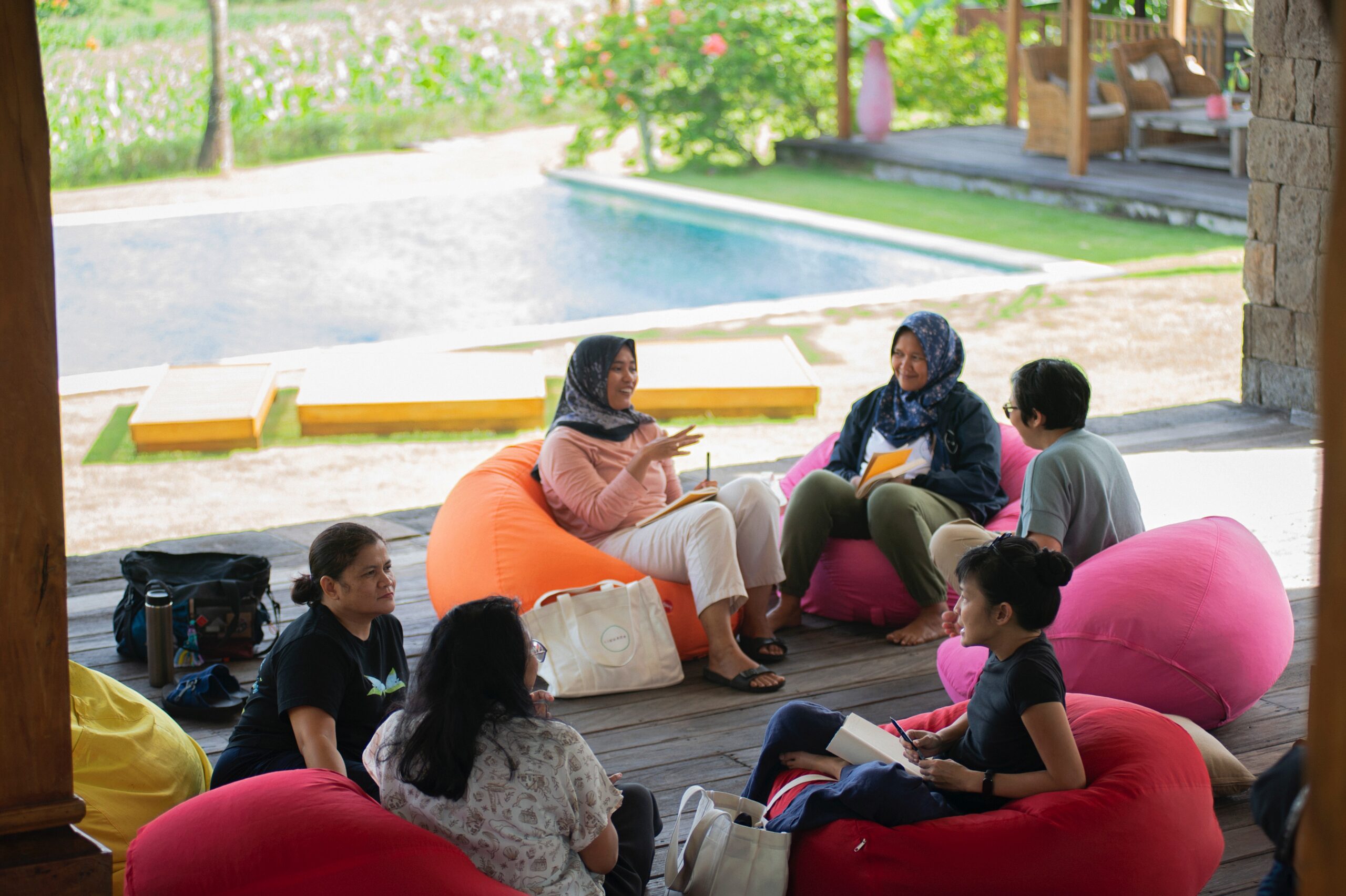
SWAARA North Sulawesi was not born from a program mandate or an institutional project. It grew from conversations and from the shared restlessness of two community organizers, Leivy and Eliana, who sensed a simple but essential need among young leaders: a space to be heard as human beings, not merely as roles.
Amid demanding social work, ranging from legal advocacy, education, and environmental action to mental health, organizational and community leaders often become a place of support for many others. Yet rarely is there space for them to share their own vulnerability, fatigue, and the quiet questions that accompany the journey of leadership.
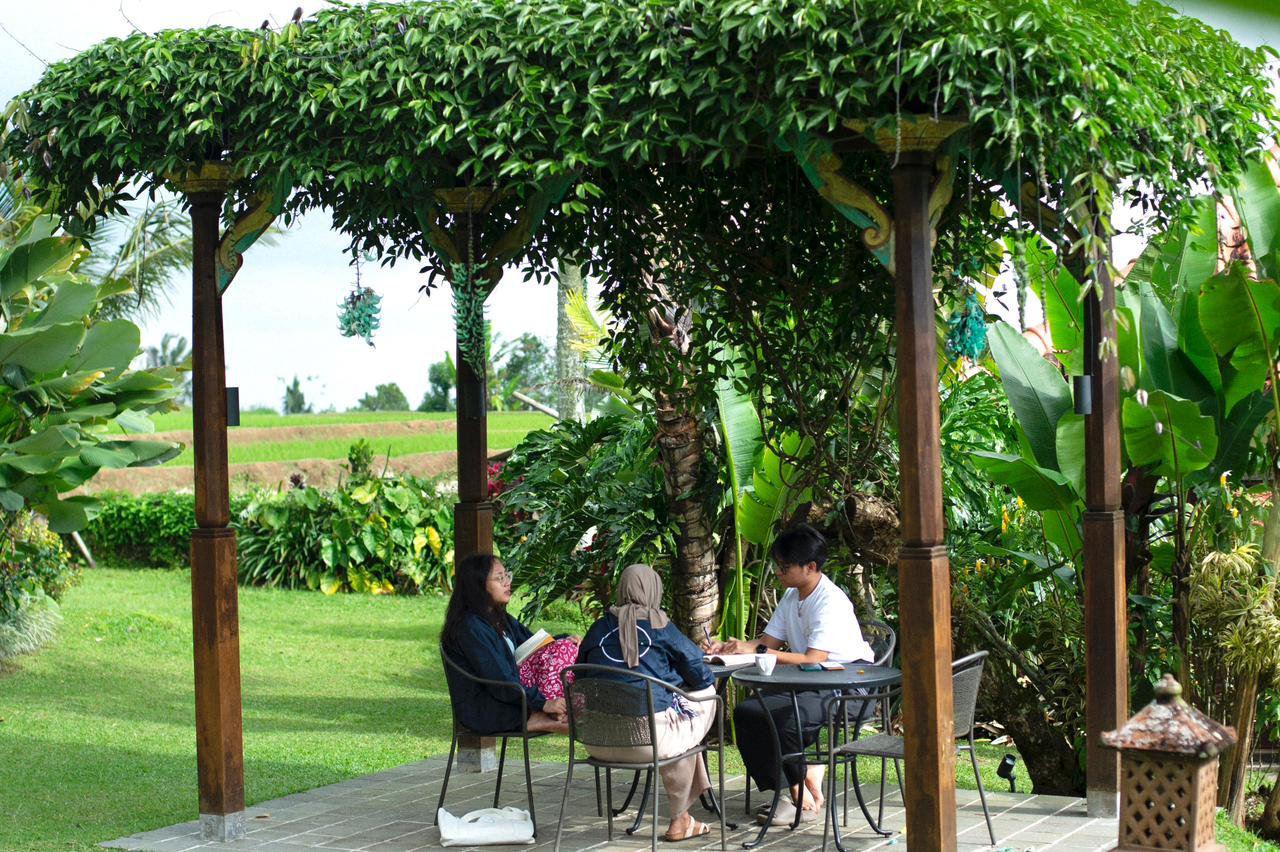
What began as a modest sharing circle that met regularly has since grown. SWAARA North Sulawesi gradually invited leaders and community organizers across sectors to sit together in a shared reflective space.
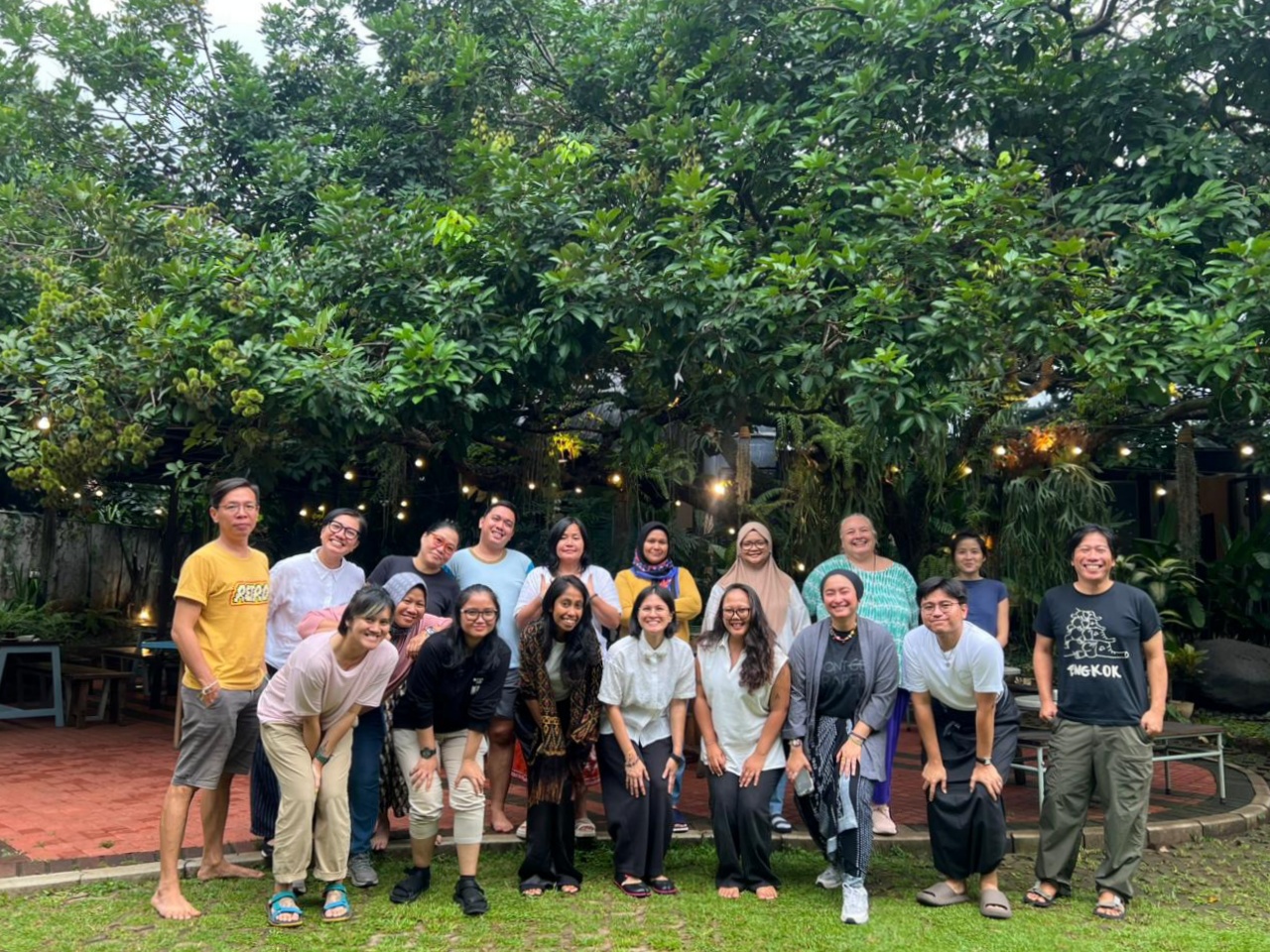
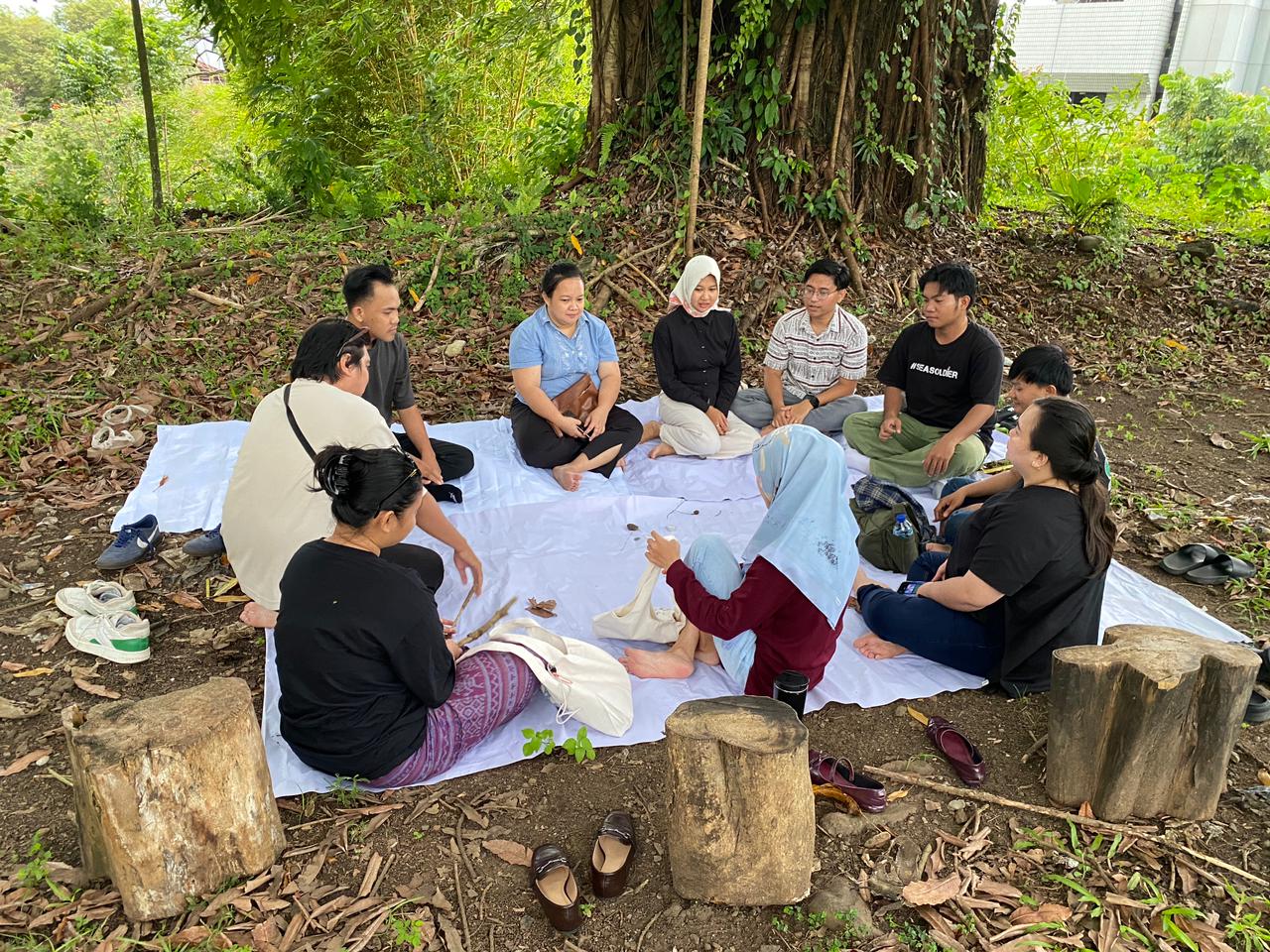
At the first SWAARA gathering, around ten participants came from various organizations and communities, including Generasi Pesona Indonesia, Seribu Guru, Seasoldier, Komunitas Narasi Sulawesi Utara, Lembaga Bantuan Hukum (LBH) Sulawesi Utara, and Aliansi Masyarakat Adat Nusantara. Artists from theatre and stand-up comedy communities were also present, alongside literacy advocates, education activists, and organizers working on environmental and mental health issues.
This diversity brought together a wide spectrum of leadership from structured organizations to volunteer-driven communities. Each carried different dynamics, challenges, and working rhythms. Within the SWAARA circle, however, those differences slowly softened. What began to emerge were shared human stories, equal in their longing to be heard.
From the beginning, this space was intentionally designed as a self-organized and voluntary dialogue, not a formal forum, not a coordination meeting, and not a place to draft agendas.
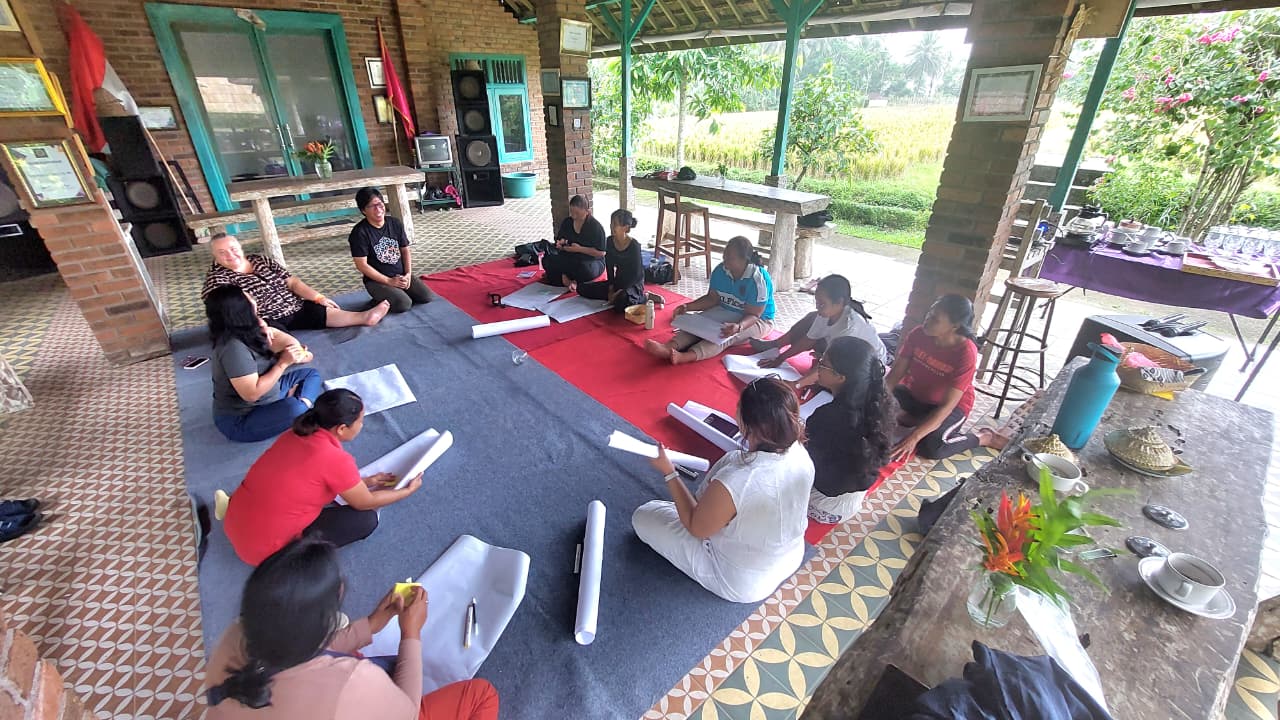
Facilitators opened with a “tone-down” session, inviting participants to slow their pace from the usual rhythm of formal meetings. Each person introduced themselves through a personal story and was invited to bring a meaningful object, placing it at the center of the circle as a symbol of what they wished to share.
The witness circle method was then practiced. Participants spoke one by one, while others listened without interrupting, correcting, or offering solutions. This simple practice opened emotional space rarely found in everyday organizational settings. It fostered a sense of safety and helped participants recognize that the challenges they carry are not theirs alone.
As conversations deepened, a shared realization surfaced: many leaders live under pressure to appear strong, resilient, and always ready with answers. In certain social contexts, showing vulnerability is still perceived as weakness.
Many organizations also lack facilitation practices that allow emotional reflection to unfold safely. As a result, emotional exhaustion, uncertainty about direction, and anxiety around leadership regeneration are often carried in silence.
SWAARA gently proposes another possibility: that vulnerability is not a threat to leadership, but a doorway to deeper empathy and solidarity.
Participants named the challenges they face from difficulties in organizational regeneration, to limited time due to volunteer commitments, to the emotional and financial fatigue that accompanies long-term social work.
Some reflected on intergenerational dynamics within organizations, how values such as loyalty, sacrifice, and hierarchy can be both sustaining forces and barriers in leadership transition processes.
These reflections reveal that leadership is not only about technical capacity. It is also about relationships, organizational culture, and the emotional conditions that allow people to grow.
Although it was only the first meeting, its resonance was already felt. Some participants shared a sense of relief at finally being able to speak about things that had never surfaced in formal organizational spaces.
Others began to see the importance of celebrating small achievements that often go unnoticed. A few expressed interest in bringing the circle reflection method into their own communities as a new way to nurture internal dialogue.
More than a discussion forum, SWAARA became a small space of re-grounding, a place where leaders and organizers could reconnect with collective energy.
SWAARA North Sulawesi reminds us that community leaders do not only need technical training or capacity-building. They also need spaces to pause, to listen, and to reconnect with the deeper reasons they began this work.
The space may be simple, yet its consistency holds the potential to cultivate a more empathetic, mutually supportive, and sustainable leadership ecosystem in North Sulawesi.
From this experience grows a quiet awareness: leadership does not have to be carried alone. Sometimes, what is needed is simply a circle to sit together and to truly listen.
*(Laras Novalia dan Luh Putu Kusuma Ririen)