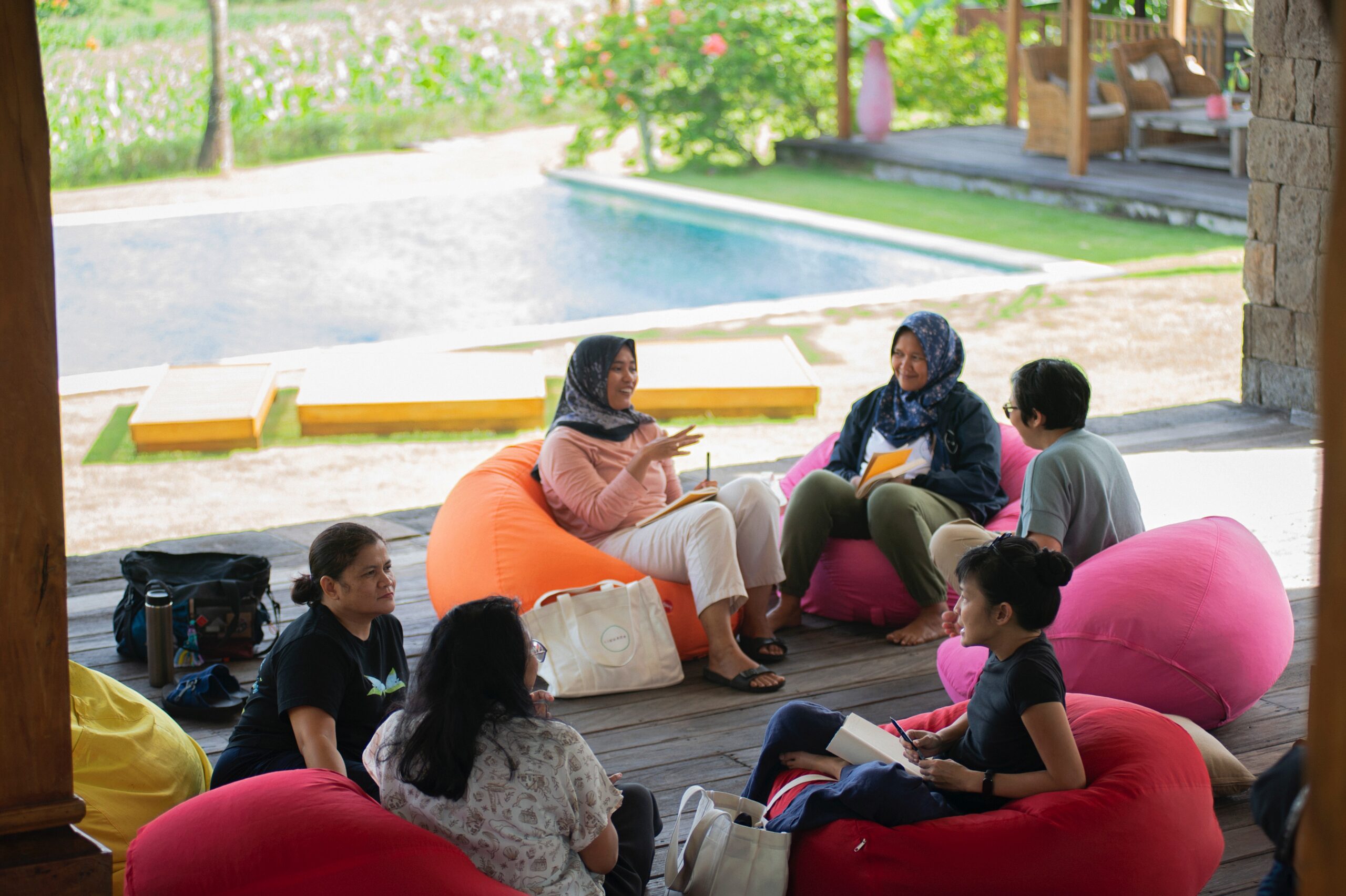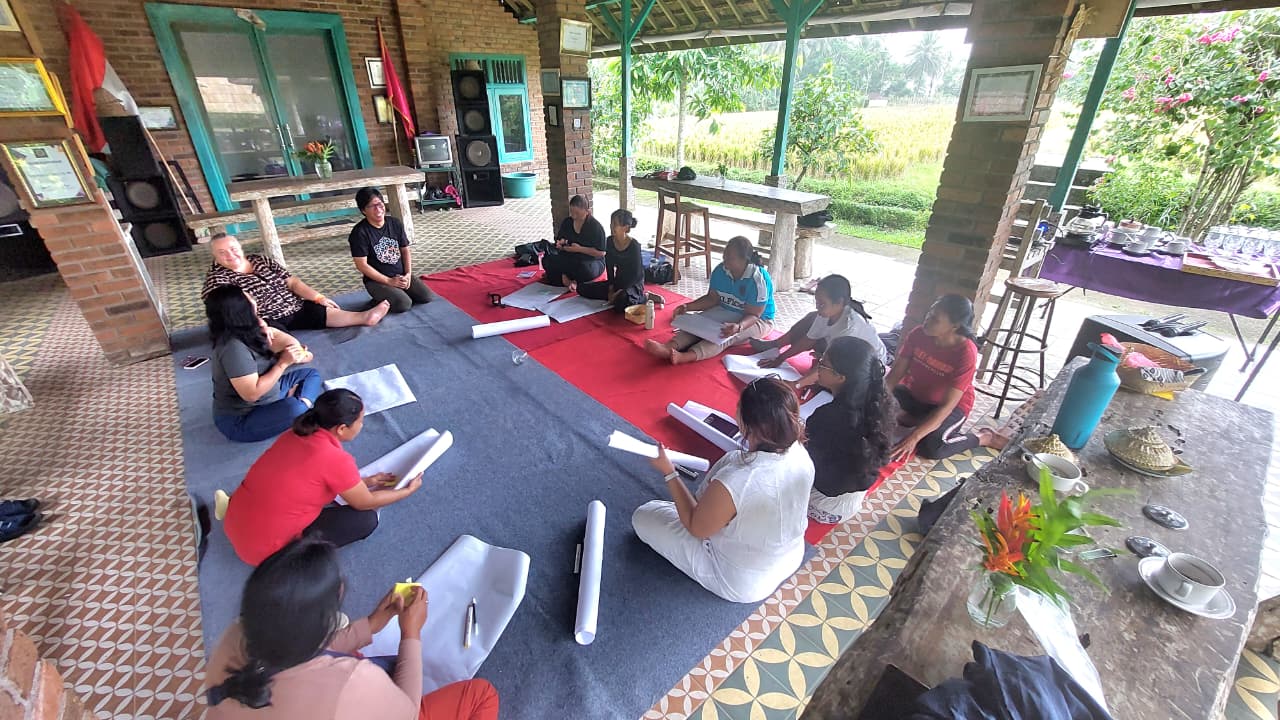
There is always something warm that emerges each time a circle begins. On that day, eleven women from the Bali Women Crisis Centre Legal Aid Institute (LBH BWCC) and SAFEnet gathered, entering a process guided by presence, bodily awareness, and the Way of Council approach. Linkara once again created a structured safe space that allowed grassroots women leaders to show up fully for themselves and for one another.
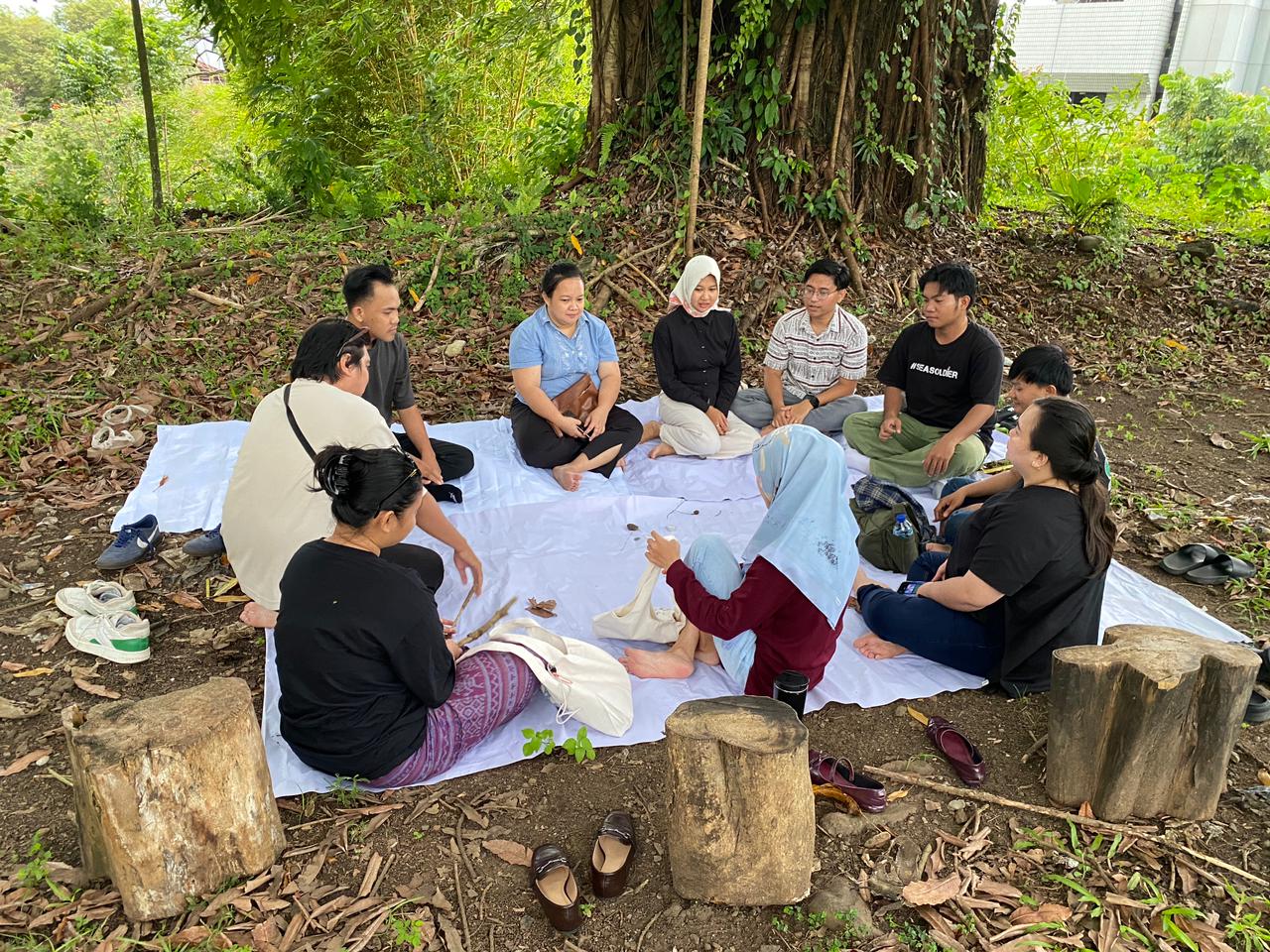
The first circle opened with a journey back to childhood, a time that was not always sweet. As the talking piece moved from one hand to the next, a pattern slowly appeared. Many participants found it easier to recall the difficult parts of their past rather than the joyful ones. Some grew up helping their parents work, others spent their childhood in solitude, and some had to live far away from their families. Through the “witnessing” session, participants reflected back what they heard, recognizing that these stories have shaped the way they lead today. The habit of “always being strong,” they realized, often comes from a childhood that left little room for vulnerability.
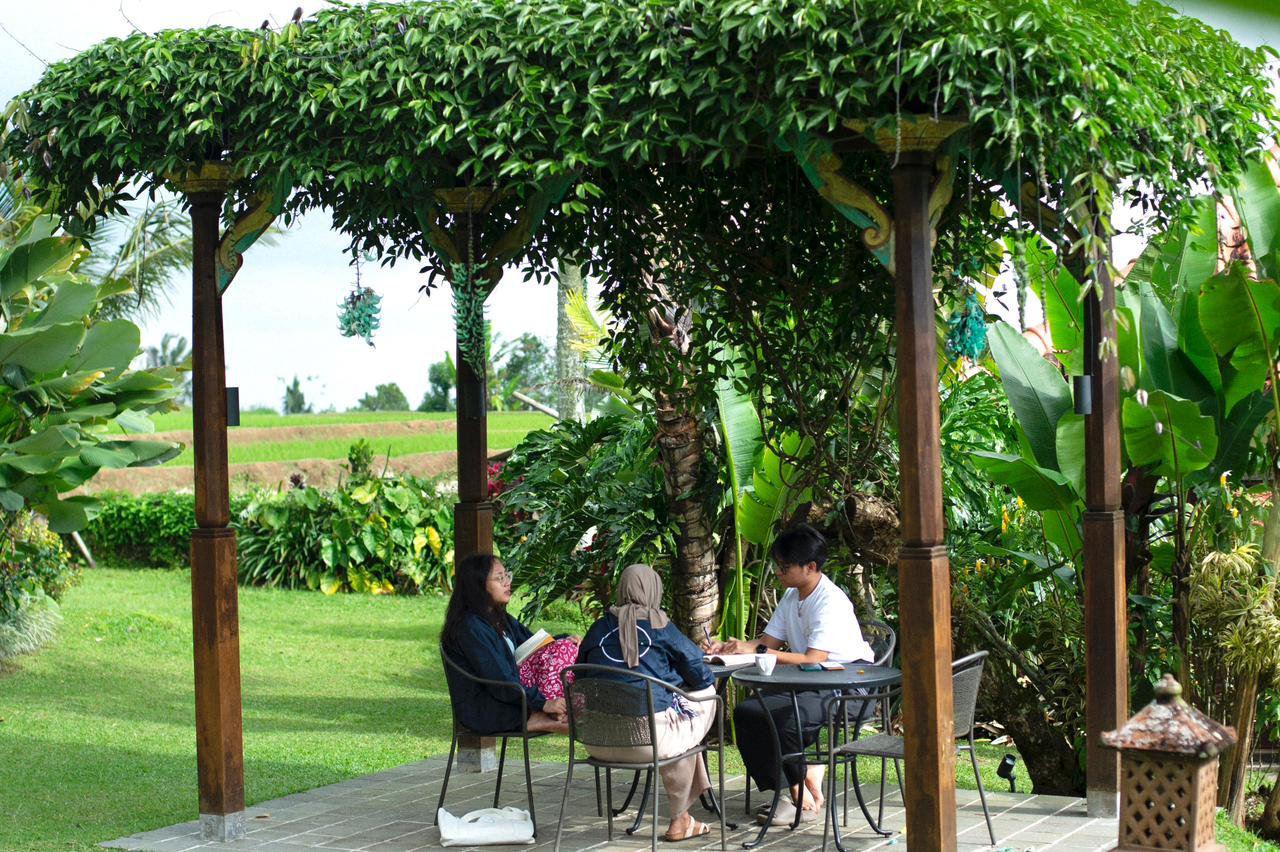
In the Personal Systemic Mapping session, participants began outlining the factors that most influence them in their current lives. They were invited to understand themselves not only through their thoughts but also through their bodies, paying attention to physical sensations and noticing how each element resonated with them. Through this process, they gained a more complete picture of their personal systems, saw the patterns that have been forming, and opened space for deeper reflection and self-understanding.
As they entered the second circle, the atmosphere shifted when a simple question was asked, “What makes you most uneasy?” From there, the conversation flowed toward pressing issues around how Balinese women continue to negotiate within customary structures that often position them unequally. Concerns about their daughters’ future, inheritance rights, their place within customary families, and access to decision-making spaces emerged again and again. Participants also discussed changes within the Bali Customary Village Council (Majelis Desa Adat/MDA) Bali that are now more accommodating of women’s rights, though many acknowledged that this information has not yet reached the wider community. From these stories came a shared understanding that changes in customary law without proper outreach do not offer protection; they remain mere documents.

(Participants discussed and shared reflections on issues related to Balinese women)
The third circle created space for participants to explore more deeply the tension between customary systems and gender justice. Some shared real cases, others offered legal perspectives, and some spoke from personal experience. From these varied voices, the discussion converged on a shared hope: that the future of Balinese women must be built with the support of many actors, including customary leaders, grassroots organizations, service institutions, and the community at large.
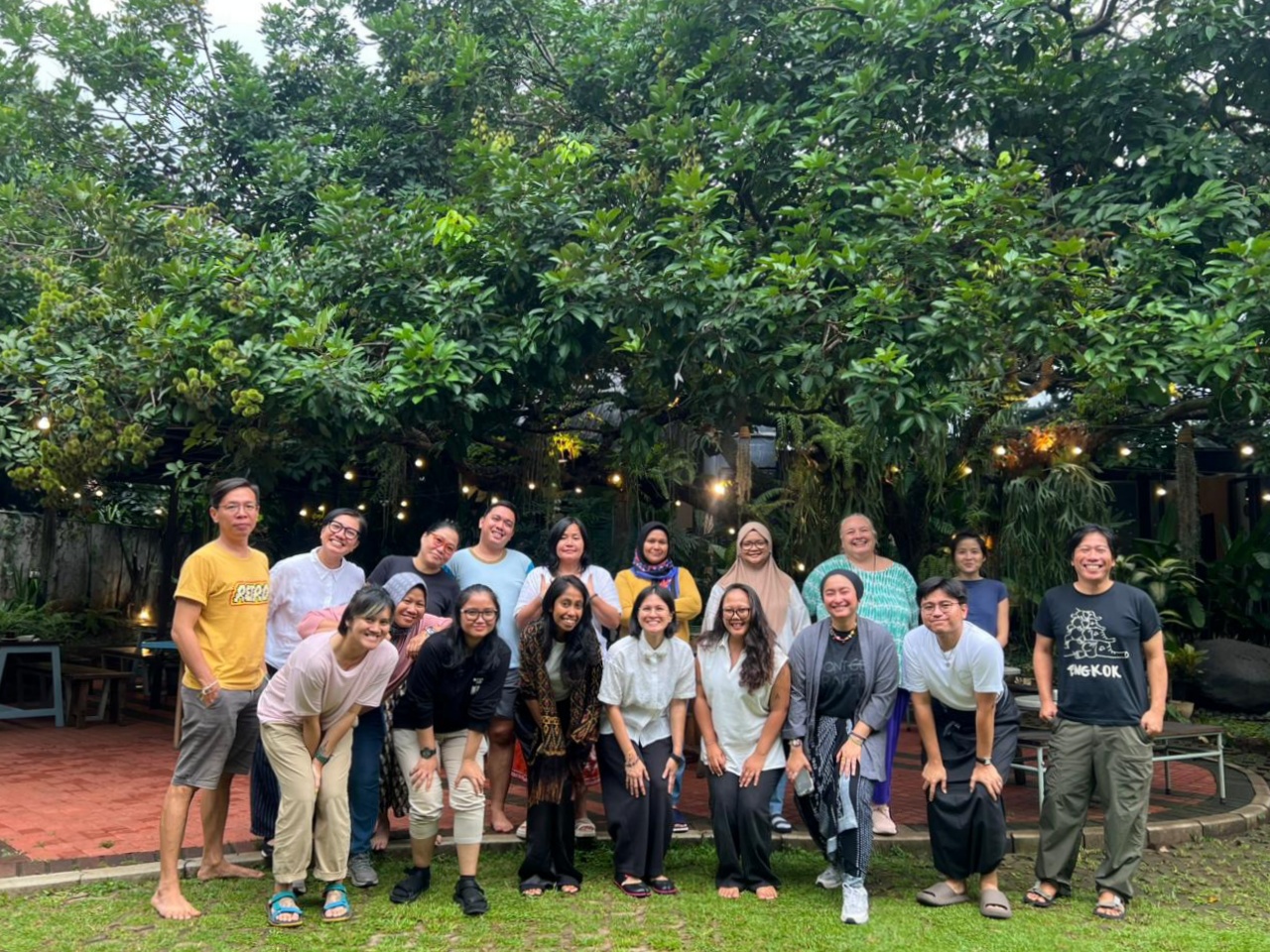
The final circle closed with an invitation for participants to express themselves spontaneously through movement, sound, or simple gestures as a way to release tension and reconnect with their bodies and emotions. This session highlighted the importance of being oneself, being fully present, and celebrating diverse expressions within a safe space where every voice is valued. This closing moment helped participants return to bodily awareness after an intense conversation and strengthened their sense of togetherness. It may have appeared simple from the outside, but within that space, the shared movement became a gesture of solidarity, a sign that everyone left with lighter hearts, deeper connection, and a renewed awareness that leadership grows from their bodies and lived experiences.
*(Laras Novalia)