Part 2 – Sitting In Council
“Wisdom flows from the wholeness of the circle and reveals itself as “the truth of council”. The expression of this truth can come through anyone in the circle or through the silence. Listening to the voice of council teaches us that the circle’s knowledge is greater than the totality of its members’ individual knowing.”
The Way of Council (2nd Ed.) – Zimmerman J and Coyle V, 2009
Discovering The Way of Council
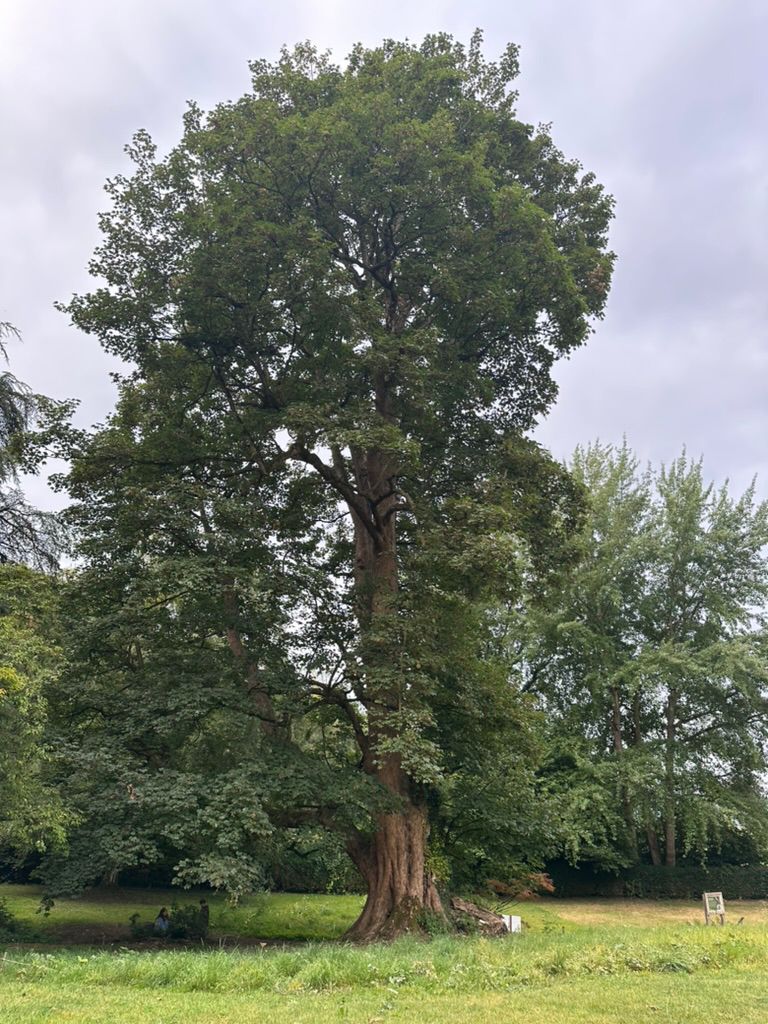
In August of this year, I had the privilege of sitting “in council” with a friend and a group of strangers in the company of an ancient sycamore tree in England. For several years I have wanted to experience sitting in council with an experienced council facilitator and surrender myself to the experience of being listened to and paying attention to others in the same circle.

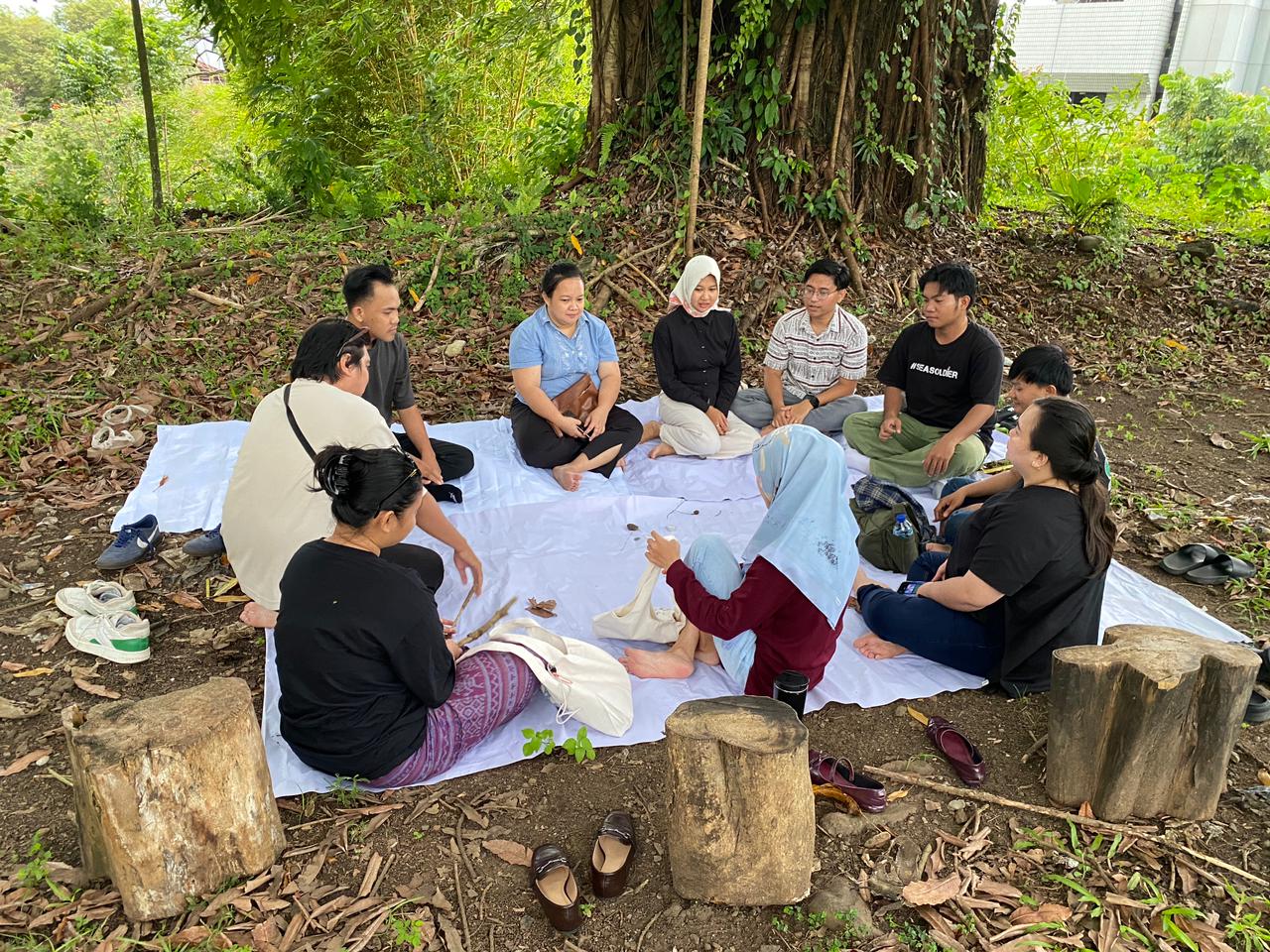
(Under the shade of a sycamore tree, sharing stories and sitting in circle)
My initial intention was seeking to learn more about how The Way of Council could be used to unlock deep and vulnerable dialogue in a group and how it may be different from what we have been applying in Linkara (www.linkara.space) and that which I have practiced before in team retreats and multi-stakeholder dialogues. I left the practice that weekend with a deep respect for this sacred communication practice grounded in the roots of Indigenous ways and nature.
The Ojai Foundation in California has contributed to promoting and sharing the practice of using council in schools, prisons, and company boardrooms. Jack Zimmerman and Virginia Coyle have also explored it in their book “The Way of Council”.
At its heart, The Way of Council is a sacred, non-hierarchical practice of deep communication. What is seemingly in its most simple form the practice of sitting in a circle passing around a talking piece whilst speaking and listening with the heart leads to the unfolding and weaving of a collective story.
Voicing what serves us and the group
I experienced that in the practice of council are encouraged to speak from the “I”, telling a story from the heart focusing on its true essence rather than extensive detail. This helps the story’s essence serve the circle and invites deep listening. Participants are asked to observe the sensations in the body in a process of self-witnessing on receiving the talking piece and ask themselves these three questions before putting the story into the circle:
Just asking these questions can help bring forth clarity and courage needed to give voice to the thought (Zimmerman and Coyle 2nd Edition). The impact of being truly heard and supported by listening from the heart can be truly healing.
Sharing your own experience and feelings not others
One of the clear differences I experienced between sitting in a circle discussion and a more conscious practice of The Way of Council is the discipline of not talking about anyone else in the circle. Ensuring that it is not a place of blame or accusation. Usually, a flame or a fire is placed at the centre of the circle and in practice we were encouraged not to talk or nod across the fire which in indigenous practice protects the spirits of the children. To talk or nod across the circle blows out the fire. This deepened my respect for the ritual and every individual voice in the circle.
The Power of witness
Another highlight of my experience in this practice was experiencing the power of witness that is inherent and deepens how the circle can harness the intention of “the field” that has been set and the continual flow of the stories. Through self-witness and witness remarks a bigger voice of the circle emerged rather than many separate personal stories. In my own practice as a facilitator, I usually invite what I have called “reflections” at the end of a circle. However, there is a distinct difference between “reflections” and providing witness comments in the practice of council. In council there is a strict discipline of not sharing your opinion, advice or general conclusions but distilling your actual observations into statements such as I observed, I heard, I felt, I noticed……from your heartfelt experience in that council circle. This elevates the interconnectedness of the stories and the higher-level story that is coming through the circle. Each voice becomes more and more part of a larger voice.
Going deeper and deeper
In total we spent two days sitting in council during my time in Stroud. Each round of council built on a previous round using a prompt or thread emerging from the previous circle. We were 15 people experimenting with different forms. Even in learning mode, we never limited ourselves to one round per session, sometimes we went round 3-5 times. Encouraged to “keep it lean” and stick to the essence of our stories we kept the story flowing in the circle as we passed the talking stick around and we were invited to use the word “and” not “but”.
The power of ceremony
Leaning into the practice of ceremony as part of the practice of Way of Council felt good to me personally. It moved me into a different level of intention and attention. It made me more aware of where I was physically and the connection with place and nature.
I have learned in my own facilitation practice that paying attention to the physical environment and how participants are welcomed into the space sets the tone for sensitivity and attention. For example:
Any of these or a combination can help to move the group into a different space and energy from everyday life before they enter or leave the space of deep council.
An invitation to practice
As we got deeper and deeper into the practice of The Way of Council my body became lighter and lighter, and I was fascinated how the inter-connectedness of the stories brought forth new clarity. I noticed the power and intimacy of voicing what needed to be said in the moment both individually and collectively. In the end something had shifted in our field, but we didn’t need to talk about it anymore.
I am deeply grateful to my friend Anna Jenkins who brought this practice to my attention and to Pip Bondy (www.ancienthealingways.co.uk) who was the facilitator on our weekend.
I feel we need to engage in communication spaces where human dignity is respected and our connection to nature is reset. The Way of Council does present an opportunity to deepen connection and conversations that matter now. My intention moving forward is to create spaces to practice The Way of Council with its unique elements of discipline shared here especially in leading conversations in the civil society leadership and land use and climate space.
If you’re curious about bringing this practice into your own leadership space, here’s how to reach us: Karen (Linkara Team) – karen@linkara.space
*(Karen Edwards)